Taylor Swift and Travis Kelce Face a Hypothetical On-Air Confrontation That Sparks a Debate About Privacy and Public Responsibility
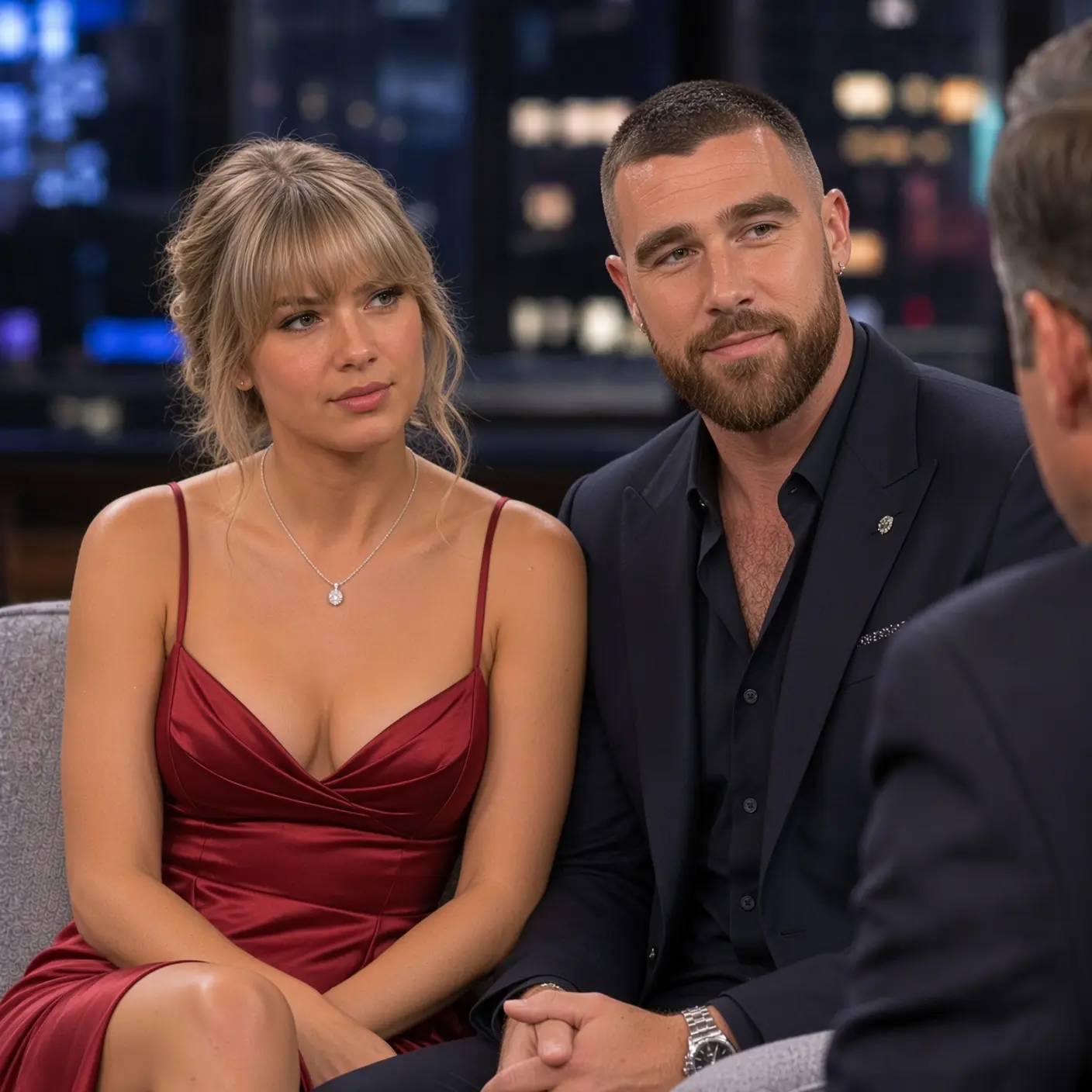
A dramatic television interview scenario involving Taylor Swift and Travis Kelce has captured the imagination of entertainment audiences. In the fictionalized scenario, the couple faces a provocative question about the 2026 U.S. midterm election results, leading to a tense exchange with the host. When the interviewer presses them further, the two reportedly decide to end the conversation and leave the studio, creating an imagined moment of television drama that raises questions about celebrity, personal convictions, and the boundaries of public discussion.
The scenario places two of America's most recognizable public figures in an uncomfortable situation. Taylor Swift, whose influence extends far beyond the music industry, and Travis Kelce, one of professional football's most recognizable personalities, are imagined confronting a difficult question under the bright lights of a television studio. Although no verified evidence establishes that this particular confrontation occurred, the premise offers an opportunity to examine the complicated relationship between fame, media attention, and personal boundaries.
For Taylor, public conversations about social issues are nothing new. Throughout her career, she has experienced the extraordinary attention that follows every statement, appearance, and public decision. Her music has connected with millions of listeners, while her personal life has frequently become a subject of international discussion. That level of visibility means even an ordinary interview can attract enormous attention when the conversation moves into controversial territory.
Travis Kelce has experienced a similar transformation in public visibility. Known initially for his achievements on the football field, he has become an entertainment personality whose appearances and personal relationships attract attention from audiences beyond the NFL. His relationship with Taylor has introduced him to an even wider audience, creating a unique intersection between sports, music, and popular culture.
In the imagined television scenario, the interview begins with what appears to be a conventional discussion. The host welcomes the couple, introduces several topics, and asks questions about their careers, public appearances, and experiences living under constant media attention. At first, the atmosphere remains relatively relaxed. Both guests appear prepared to participate in the conversation, and the audience expects an ordinary entertainment interview.
However, the atmosphere changes when the discussion turns toward the 2026 midterm elections. The host introduces a provocative question involving political expectations and the influence of celebrities on public opinion. The question creates an uncomfortable moment, particularly because it shifts the conversation away from entertainment and into a subject that can generate strong reactions.
In this fictionalized account, Taylor pauses before responding. Rather than immediately answering, she appears to consider the wording of the question. Her expression becomes more serious, and the relaxed atmosphere begins to disappear. The host continues, attempting to encourage a more direct response.
The imagined exchange highlights a familiar challenge faced by celebrities. Public figures are frequently expected to comment on complicated subjects, even when they would prefer to keep certain opinions private. Their words can quickly become headlines, social media discussions, and arguments among supporters and critics.
For someone with Taylor's enormous audience, every statement carries additional significance. A brief answer can be interpreted in multiple ways, while silence can also become a subject of speculation. This creates a difficult environment in which personal boundaries and public expectations often collide.
Travis, meanwhile, is imagined sitting beside Taylor as the discussion becomes increasingly uncomfortable. His presence adds another dimension to the situation. Although he is accustomed to answering questions from journalists about football, team performance, and competition, a politically charged entertainment interview presents a very different challenge.
When the host presses the subject again, the tension reaches its imagined turning point. Taylor becomes visibly frustrated, while Travis appears equally uncomfortable with the direction of the conversation. Rather than allowing the interview to continue indefinitely, the couple decides that the discussion has moved beyond what they are willing to address.
The fictional scene reaches its dramatic conclusion when they stand up and prepare to leave the studio. The audience watches as the interview comes to an unexpected end. The host is left facing an unfinished conversation, while the production team attempts to manage the sudden change in the program.
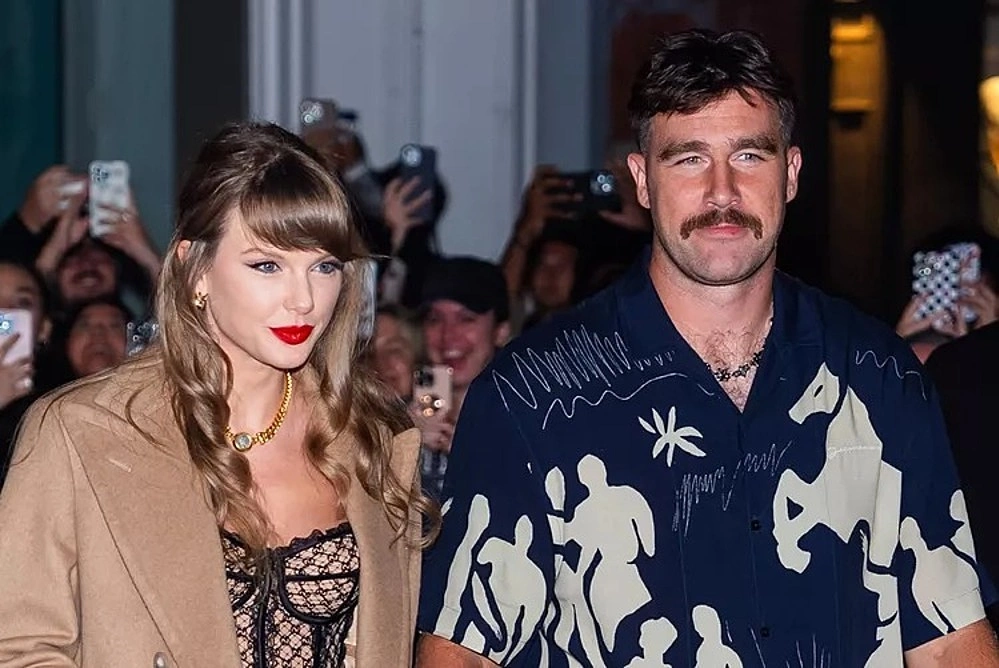
What makes this imagined moment interesting is not simply the possibility of a celebrity walking away from an interview. It is the larger question of whether public figures should be expected to answer every question placed before them.
Journalists have a legitimate responsibility to ask challenging questions. Interviews become meaningful when guests are encouraged to explain their positions, respond to criticism, and address difficult subjects. At the same time, guests have the right to establish boundaries and decide which conversations they are willing to participate in.
The distinction between challenging journalism and unnecessarily provocative questioning can sometimes become difficult to recognize. A question may be uncomfortable but important, while another may be designed primarily to generate a dramatic reaction. The way an interviewer presents a subject can influence the entire atmosphere of a conversation.
Taylor and Travis also represent two different entertainment worlds that increasingly overlap. Music and professional sports have become powerful cultural forces, with athletes and performers sharing audiences, sponsorship opportunities, and major public platforms. Their relationship has become a prominent example of how these industries can intersect.
That attention brings advantages, but it also creates pressure. Ordinary personal decisions can become international talking points, and even small disagreements can be transformed into dramatic narratives. Maintaining privacy becomes particularly challenging when millions of people follow a couple's public appearances.
The fictionalized interview also raises an important question about the responsibility of entertainment media. Dramatic headlines can attract attention, but responsible reporting requires a clear distinction between confirmed events, speculation, and invented scenarios. Without that distinction, audiences may mistake an imagined television confrontation for genuine breaking news.
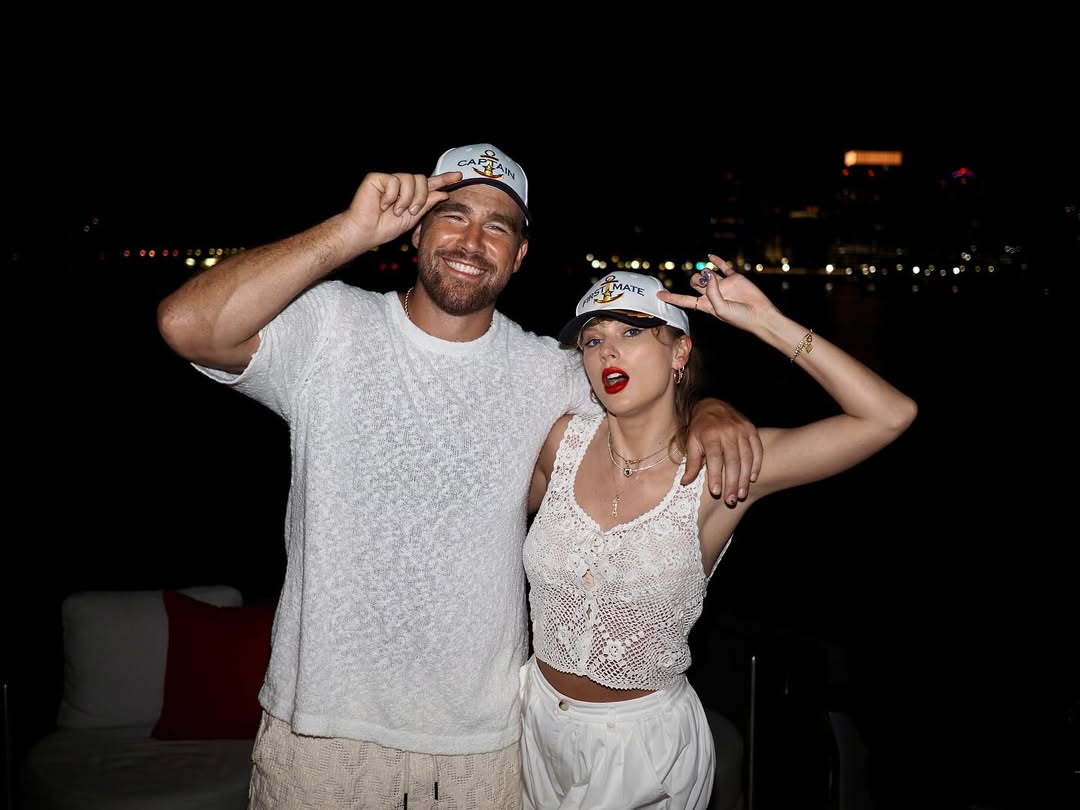
Ultimately, the imagined departure of Taylor Swift and Travis Kelce offers a broader reflection on celebrity culture. It illustrates how quickly an ordinary interview can become a debate about respect, personal convictions, media expectations, and the right to privacy.
Whether discussing music, football, or politics, public figures remain individuals who must navigate complicated decisions in front of enormous audiences. Their popularity does not automatically mean they must answer every question or participate in every debate.
And perhaps that is the most interesting question raised by this hypothetical television moment: where should the boundary between public curiosity and personal privacy be drawn?
For fans of Taylor Swift and Travis Kelce, the scenario is a reminder that behind the fame, performances, stadium appearances, and headlines are two people navigating the same complicated relationship between public attention and private life as many others. The fictional confrontation may be dramatic, but the discussion it inspires about respect, responsibility, and personal boundaries is very real.