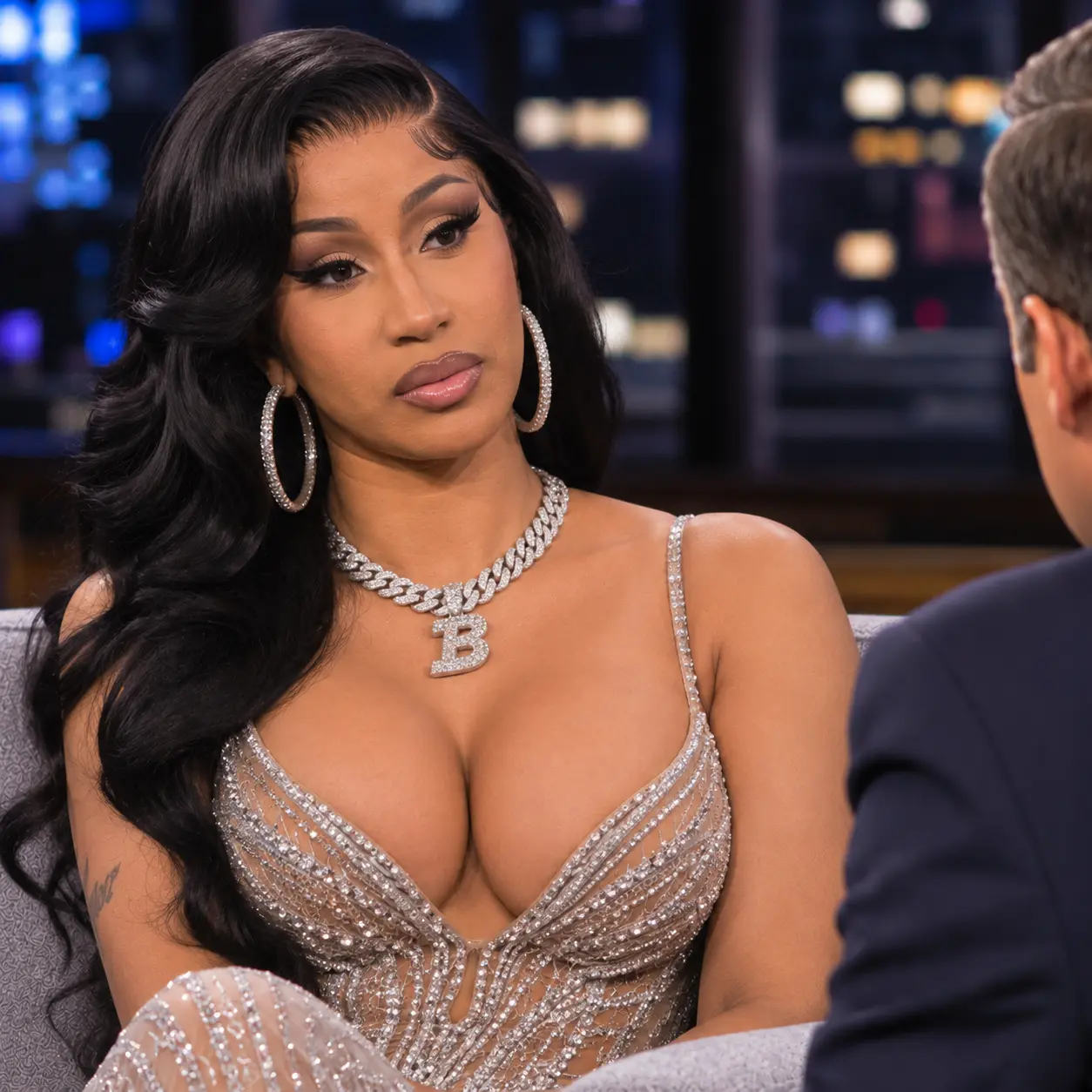
Cardi B and a Heated Television Interview: An Imagined Walkout Sparks Questions About Politics and Respect
NEW YORK CITY — A television interview featuring Grammy-winning rapper Cardi B takes an unexpectedly dramatic turn in this fictional scenario, transforming an ordinary entertainment conversation into an intense exchange about politics, freedom of expression, and the responsibilities of celebrities.
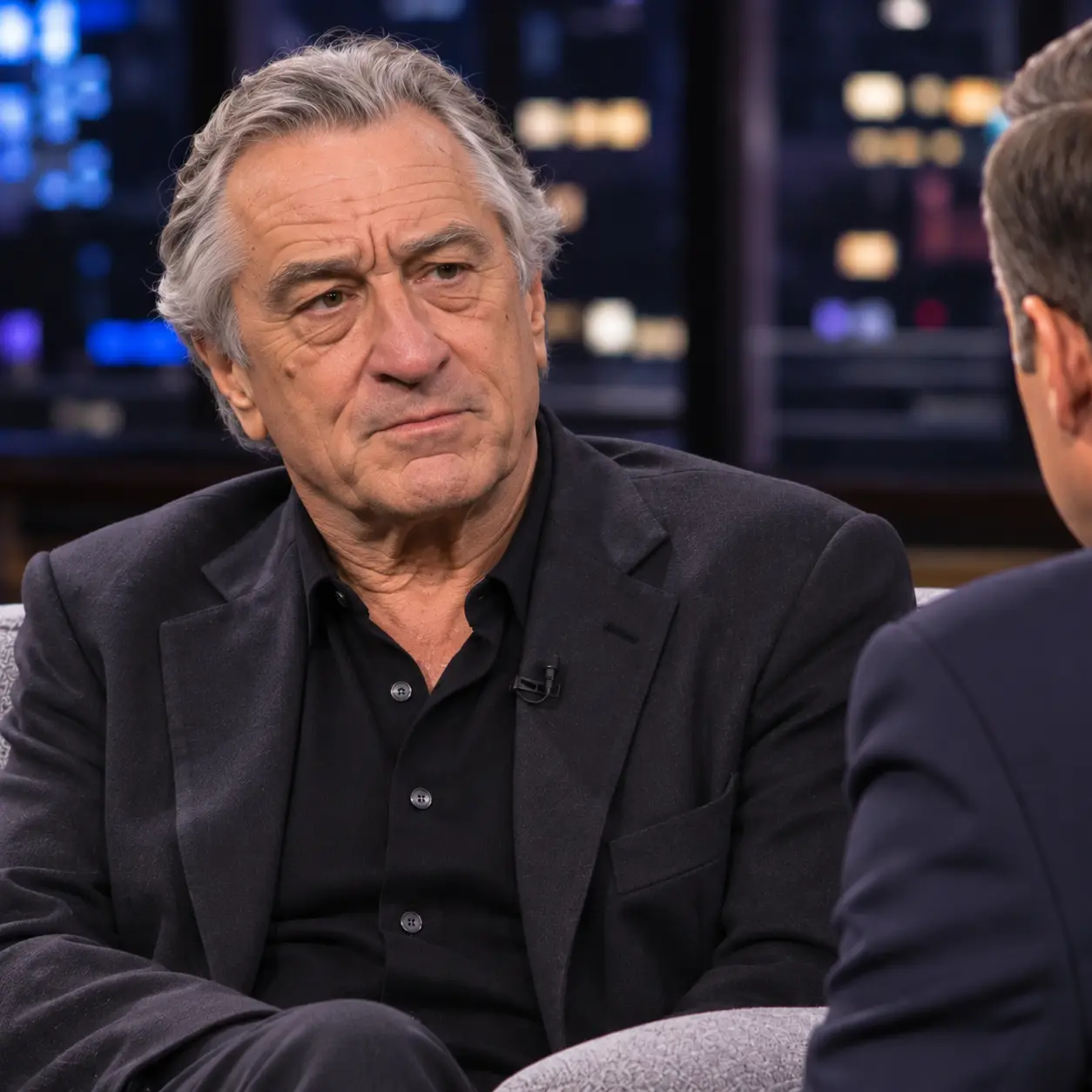
The imagined confrontation begins inside a Manhattan television studio, where Cardi B has been invited to discuss her music career, personal experiences, and the influence of entertainment on American culture.
Initially, the atmosphere appears relaxed. The audience applauds as the rapper enters the studio, smiling and greeting the host before taking her seat.
Dressed in a striking designer outfit, Cardi B appears confident and ready for a lively conversation.
The host begins by discussing her rise from social media personality to internationally recognized recording artist. Their exchange includes questions about her creative process, professional ambitions, and relationship with her fans.
However, the tone changes when the interviewer unexpectedly introduces the 2026 United States midterm elections.
Instead of asking another question about music, he challenges Cardi B about celebrities who publicly discuss political issues.
The host suggests that entertainers sometimes use controversial political opinions to attract attention rather than contribute meaningfully to public debate.

In this imagined interview, Cardi B immediately questions that assumption.
She argues that musicians and performers are also citizens who experience the consequences of political decisions.
Her response is direct, passionate, and increasingly serious.
The interviewer presses further, asking whether celebrities should be held accountable when their political statements influence millions of followers.
Cardi B leans forward.
Her expression changes from surprise to frustration as she explains that expressing an opinion does not mean claiming to possess every answer.
In the fictional exchange, she emphasizes that public figures should be encouraged to learn about important issues rather than discouraged from discussing them.
The audience grows quiet.
What began as an entertaining conversation about music has suddenly become a debate about political participation and public responsibility.
The host continues challenging her position.
He suggests that celebrities with large audiences may unintentionally oversimplify complicated political questions.
Cardi B responds that the same criticism could apply to television commentators, online personalities, and anyone else with a public platform.
She insists that thoughtful discussion should involve examining actual arguments rather than dismissing people because of their professions.
The fictional disagreement exposes a broader issue within American public life.
Celebrities can reach enormous audiences, but their popularity does not automatically make them political experts.
At the same time, professional success in entertainment does not eliminate their right to participate in public conversations.
Balancing those realities requires careful judgment from both public figures and the audiences who follow them.
As the imagined interview continues, the host introduces another provocative question.
He asks whether Cardi B believes entertainers should avoid discussing election results when their opinions might upset fans.
The rapper pauses.
Then she delivers a fictional response that becomes the emotional centerpiece of the scene.
"You can disagree with my opinions, but you cannot decide whether I deserve a voice."
The studio falls silent.
For several seconds, the host appears surprised by the intensity of her answer.
Cardi B continues, arguing that respect should remain possible even when people disagree about politics.
She explains that asking difficult questions is legitimate, but deliberately provoking someone is different from encouraging an honest conversation.
The interviewer insists that challenging guests is part of his professional responsibility.
Cardi B acknowledges that point but questions whether the discussion is still intended to inform viewers.
Her frustration becomes increasingly visible.
She gestures toward the audience and argues that ordinary people deserve meaningful explanations of political issues rather than confrontations designed primarily to produce dramatic television moments.
The host attempts to interrupt.
Cardi B raises her hand, asking him to allow her to finish speaking.
The fictional scene becomes increasingly tense as both participants struggle to maintain control of the conversation.
Finally, the interviewer repeats his original accusation.
He asks whether Cardi B's political comments are motivated more by publicity than genuine concern.
The rapper shakes her head.
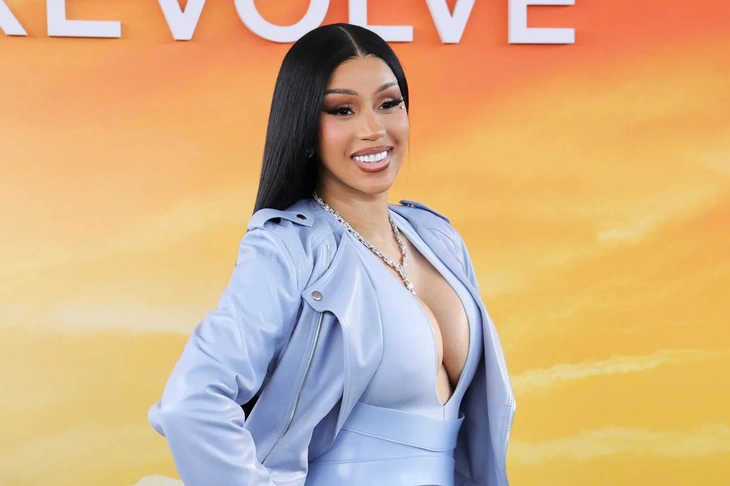
For a moment, she looks directly at the host without responding.
Then she announces that she is finished with the interview.
In the imagined sequence, Cardi B stands abruptly, removes her microphone, and places it on the couch.
The audience reacts with surprise.
The host attempts to continue the discussion, but Cardi B turns toward the studio exit.
Without returning to her seat, she walks away.
The cameras remain focused on the empty chair as the interviewer struggles to regain the program's momentum.
Within this fictional television drama, the unexpected departure becomes the defining moment of the evening.
Yet the story raises questions that extend beyond the behavior of one celebrity.
It illustrates how political conversations can become confrontational when participants begin questioning one another's motives instead of discussing their ideas.
In modern entertainment media, dramatic exchanges often attract more attention than careful explanations.
A short clip featuring an angry response or sudden walkout can circulate widely while leaving out the surrounding conversation.
That creates a challenge for viewers attempting to understand what actually happened.
Without context, an emotional moment can appear more significant than the issues being discussed.
The fictional Cardi B confrontation also highlights the complicated relationship between celebrity influence and political participation.
Cardi B has publicly discussed political and social issues during her career, demonstrating an interest in subjects beyond entertainment.
However, the imagined interview described here should not be confused with a documented public appearance.
Its purpose is to explore the tensions that can arise when a prominent entertainer encounters aggressive political questioning.
For journalists, the scenario raises questions about the difference between accountability and provocation.
Interviewers have a legitimate role in challenging public statements and asking guests to explain their positions.
But the quality of an interview also depends on whether those questions create opportunities for meaningful answers.
For celebrities, the challenge involves balancing personal convictions with the responsibility that accompanies a large public audience.
Speaking passionately can communicate sincerity, but passion alone cannot replace accurate information or thoughtful reasoning.
For viewers, the most important responsibility may be distinguishing dramatic presentation from verified events.
Sensational headlines can make fictional or exaggerated encounters appear authentic, especially when accompanied by realistic images or videos.
Understanding the difference helps prevent entertainment narratives from becoming misinformation.
In this imagined scenario, Cardi B's walkout does not resolve the disagreement.
The interviewer remains unconvinced, and the rapper leaves without completing the conversation.
Nevertheless, the confrontation leaves behind a central question.
Can people with strongly different opinions continue discussing politics without turning disagreement into personal hostility?
The answer requires more than confidence or emotional intensity.
It requires listening, patience, factual understanding, and a willingness to acknowledge that people may reach different conclusions.
Those principles apply to entertainers, journalists, politicians, and ordinary citizens alike.
The fictional interview ultimately becomes a story about the limits of confrontation.
A dramatic exit may create an unforgettable television moment, but it rarely produces the understanding that meaningful discussion requires.
In this imagined New York television encounter, Cardi B's departure brings the interview to an abrupt conclusion. The larger questions about freedom of expression, public influence, and mutual respect remain unanswered long after the studio lights fade.