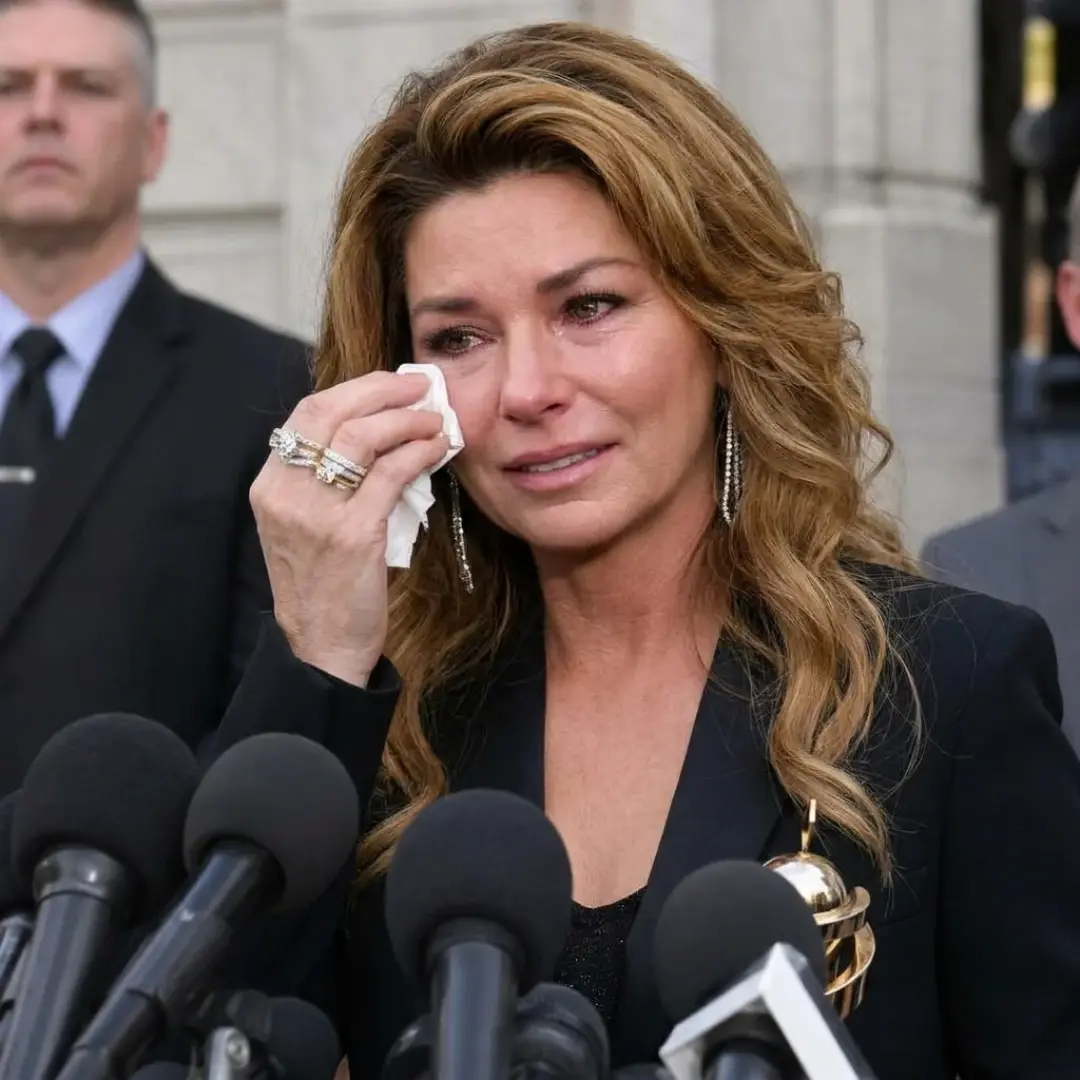
🚨⚖️💔 SHANIA TWAIN LEAVES LOS ANGELES COURTHOUSE IN TEARS — BUT HER EMOTIONAL STATEMENT MOMENTS LATER LEAVES EVERYONE SPEECHLESS! 😭😱
LOS ANGELES — For decades, Shania Twain has been celebrated as one of country music's most powerful and unforgettable voices. Her songs have inspired millions, her performances have filled arenas around the world, and her extraordinary journey has made her a symbol of determination, independence, and strength.
But in this imagined emotional scenario, the legendary singer finds herself facing a moment unlike anything her fans have ever witnessed.
There are no flashing concert lights, no cheering crowds, and no familiar melodies filling the air.
Instead, there is a courthouse, a crowd of waiting reporters, and a woman struggling to hold back tears.
As Shania Twain emerges from the imposing doors of a Los Angeles
 courthouse, the atmosphere suddenly changes.
Her eyes appear red. Her expression is unusually solemn. And although she attempts to maintain her composure, the emotion written across her face is impossible to ignore.
Photographers raise their cameras.
Reporters begin calling her name.
But Shania says nothing.
At least, not immediately.
What happens moments later becomes the defining moment of this fictional story — an unexpected statement that transforms an atmosphere of speculation into one of compassion and reflection.
A Courthouse Appearance That Raises More Questions Than Answers
In this imagined scene, the morning begins quietly outside a Los Angeles courthouse.
A small group of journalists gathers near the entrance, waiting for information about a private legal proceeding involving the singer.
The precise details remain undisclosed within the fictional storyline.
No criminal accusations, findings of wrongdoing, or real legal disputes are being asserted.
Instead, the courtroom serves as the setting for a deeply personal story about trust, emotional exhaustion, and the challenges of living under constant public scrutiny.
Inside the courthouse, Shania sits quietly as the proceedings unfold.
She listens carefully, occasionally lowering her eyes toward the documents resting in front of her.
Those seated nearby notice that she appears unusually reflective.
At one point, she presses her hands together and takes a long breath.
For someone whose career has been defined by extraordinary confidence, the moment feels unexpectedly vulnerable.
When the proceedings conclude, she remains seated for several seconds.
Then she rises, gathers her belongings, and walks toward the exit.
Outside, the cameras are already waiting.
The Moment Shania Twain Steps Into the Spotlight
As the courthouse doors open, the fictional scene takes an emotional turn.
Shania appears in a simple black outfit, with her hair falling naturally around her shoulders.
Her eyes glisten with tears.
A member of her team walks closely beside her, quietly offering support as she moves through the crowd.
“Shania, are you okay?” one reporter asks.
“Can you tell us what happened inside?”
“Do you have anything to say to your fans?”
For several moments, she continues walking without responding.
Then she stops.
She turns toward the reporters.
And instead of offering a prepared statement, she begins speaking from the heart.
“People sometimes think that being strong means you never cry. But I've learned that strength is being able to face the truth, even when it hurts.”
The fictional crowd falls silent.
Her voice is gentle but steady.
She continues:
“There are moments in life when you realize that you cannot control everything around you. You can only control how you respond, how you treat people, and whether you allow difficult experiences to change who you are.”
What began as a tense media encounter suddenly becomes something much more personal.
The Statement Nobody Expected
In the imagined exchange, one journalist asks whether the day's events have changed the way Shania views her future.
She pauses.
Then she offers an answer that seems to surprise everyone.
“I have spent so much of my life learning how to keep going. Sometimes you think you've already survived the hardest chapter, and then life reminds you that there is still more to learn.”
She briefly looks down.
When she raises her eyes again, her expression has softened.
“But I refuse to let one painful moment define the rest of my story.”
The words resonate throughout the fictional gathering.
Rather than discussing legal details, she speaks about emotional resilience and the importance of protecting one's peace.
She explains that difficult experiences do not always come with clear answers.
Sometimes there is no perfect explanation.
Sometimes closure arrives slowly.
And sometimes moving forward requires accepting that c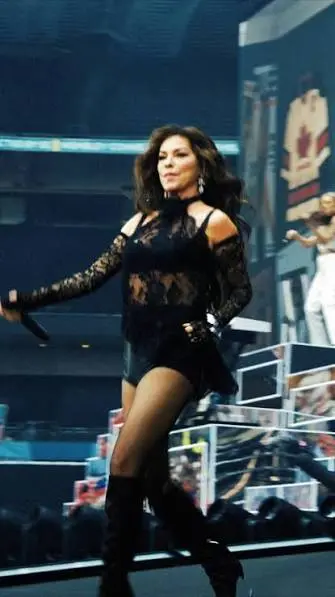 ertain questions may never be answered in the way one hopes.
For Shania, the imagined message is not about defeat.
It is about choosing hope when circumstances feel overwhelming.
A Life That Has Already Inspired Millions
Although the courthouse scene is fictional, Shania Twain's real career provides a meaningful backdrop to its themes.
Born in Windsor, Ontario, and raised in Timmins, Shania experienced considerable challenges long before becoming an international superstar.
Her journey to success was marked by personal hardship, financial struggles, and extraordinary determination.
Through persistence and talent, she became one of the most successful artists in country music history.
Albums such as The Woman in Me, Come On Over, and Up! helped redefine the possibilities of country-pop music.
Songs including You're Still the One, Man! I Feel Like a Woman!, and That Don't Impress Me Much became anthems for generations of listeners.
Her distinctive voice and confident stage presence helped establish her as a global entertainment icon.
But beyond the commercial achievements, fans have long admired her willingness to discuss personal adversity.
Her public reflections on grief, recovery, health challenges, and rebuilding confidence have often resonated with people facing difficulties in their own lives.
That history gives the fictional courthouse statement an added emotional dimension.
The imagined tears do not represent weakness.
They represent the humanity of someone who has spent decades encouraging others to believe in themselves.
Behind the Fame Is a Human Being
One of the central themes of this fictional story is the difference between a public image and private experience.
To millions of fans, Shania Twain represents glamour, confidence, and artistic triumph.
Her music frequently celebrates independence, self-worth, and the courage to embrace life.
Yet even the most accomplished performers are human.
They experience uncertainty.
They face difficult decisions.
They sometimes need privacy, understanding, and emotional support.
In the imagined courthouse encounter, Shania addresses this reality directly.
“People see the performances, the smiles, and the beautiful moments. They don't always see what it takes to keep standing when life becomes difficult.”
She pauses before adding:
“I hope people remember that everyone has a story beyond what they see on a screen.”
The fictional statement changes the tone of the gathering.
Questions about sensational details gradually give way to a more thoughtful discussion about dignity and compassion.
An Unexpected Gesture Changes the Atmosphere
Just as Shania prepares to leave, something surprising happens.
In this fictional scene, a young woman standing near the courthouse steps calls out to her.
“Shania, your music helped my mother through the hardest year of her life!”
The singer turns.
The woman continues, her voice trembling.
“She always told me that whenever life gets difficult, I should remember that I can still find my strength.”
Shania smiles faintly.
Then, instead of immediately entering her waiting vehicle, she approaches the woman.
They exchange a few quiet words.
The woman begins crying.
Shania gently embraces her.
For a brief moment, the noise of the cameras and reporters seems to disappear.
There is no dramatic announcement.
No confrontation.
Only a simple exchange between an artist and someone whose life has been touched by her music.
In the imagined story, the encounter reminds Shania that her influence extends far beyond awards, record sales, and sold-out concerts.
Her music has become part of other people's personal histories.
And sometimes those connections provide strength in return.
The Emotional Message That Changes Everything
Before leaving the courthouse, Shania turns toward the reporters one final time.
Her eyes remain moist, but her expression is calmer.
She offers a final fictional statement.
“Today was difficult. I won't pretend otherwise. But I am grateful for the people who remind me that even the hardest days do not last forever.”
She continues:
“If you're going through something painful right now, please don't believe that your story ends here. There is still hope. There is still love. And there is still a future waiting for you.”
The imagined crowd listens quietly.
Then she delivers the words that become the emotional centerpiece of the story:
“You can break my heart, but you cannot take away my courage to begin again.”
The statement is followed by a long silence.
A member of her team opens the vehicle door.
Shania thanks those gathered and steps inside.
As the car slowly pulls away, the courthouse returns to its ordinary rhythm.
But the emotional message remains.
Why This Fictional Story Feels So Powerful
The imagined scene reflects a universal truth: public success does not protect anyone from emotional hardship.
A person can be admired by millions and still experience moments of uncertainty.
They can appear confident onstage while privately working through difficult feelings.
And they can be extraordinarily successful while still needing kindness and understanding.
For Shania Twain, whose music has celebrated resilience and independence for decades, these themes feel particularly meaningful.
The fictional courthouse scene is not a report of an actual legal development.
It is a dramatic exploration of the courage required to face painful moments without surrendering hope.
It also raises an important question about celebrity culture.
When a famous person appears emotional, should the public immediately demand an explanation?
Or should compassion sometimes matter more than curiosity?
The imagined encounter suggests that dignity and privacy deserve consideration, regardless of how recognizable someone may be.
A Final Reminder From the Queen of Country Pop
As this fictional story draws to a close, the focus shifts away from the courthouse and toward the larger message.
Shania Twain's real-life legacy is built on far more than extraordinary musical achievements.
Her career represents perseverance, reinvention, and the power of finding one's voice.
The imagined scene adds another chapter to those themes, presenting a woman who refuses to allow an emotionally difficult day to determine her future.
The tears may be memorable.
The unexpected statement may capture attention.
But the lasting message is about resilience.
Life can be unpredictable.
Even the strongest people sometimes struggle.
And there is no shame in acknowledging pain while continuing to move forward.
In this imagined moment, Shania Twain does not leave the courthouse as someone defeated by heartbreak. She leaves as someone determined to face tomorrow with courage, dignity, and hope.
Because sometimes the most powerful words are not sung beneath the bright lights of a concert stage.
Sometimes they are spoken quietly, through tears, when someone chooses to keep believing in a better tomorrow.
And that is the message at the heart of this fictional Shania Twain story: a difficult chapter does not have to be the final chapter. ❤️
#ShaniaTwain #QueenOfCountryPop #CountryMusic #CelebrityStories #EmotionalStory #StrengthAndHope #CountryMusicLegend