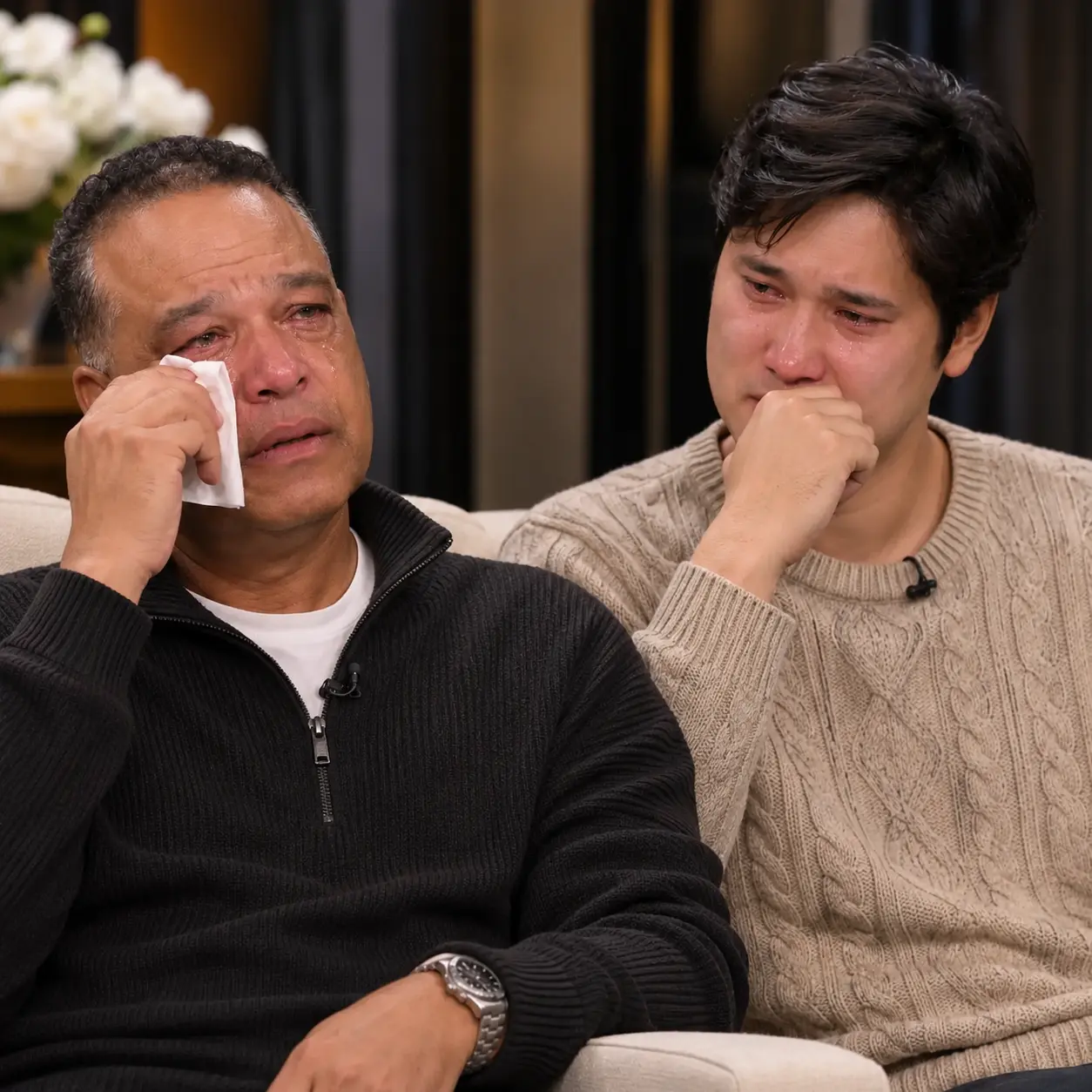
LOS ANGELES — The baseball world has witnessed countless unforgettable moments involving Shohei Ohtani and Los Angeles Dodgers manager Dave Roberts, but few stories capture the emotional weight of their relationship quite like this one. In a deeply moving imagined chapter unfolding behind the scenes of one of Major League Baseball's most celebrated organizations, Roberts finds himself confronting a difficult truth about leadership, loyalty, and the sacrifices made by the athletes who trust him. What begins as a quiet conversation inside the Dodgers organization gradually develops into a moment of reflection that neither the manager nor his superstar player could have anticipated.
For years, Ohtani has represented something extraordinary in professional baseball. His remarkable ability to dominate as both a hitter and pitcher has challenged conventional expectations, attracting international attention and inspiring countless young athletes. Yet, beneath the extraordinary achievements and global admiration, there is another side to his journey that rarely receives the same attention. Every appearance carries enormous expectations, every difficult stretch invites intense scrutiny, and every setback becomes part of a much larger public conversation about his legacy.
Dave Roberts understands that pressure better than most. As the manager of the Los Angeles Dodgers, he has been responsible for guiding a roster filled with exceptional talent while navigating the unpredictable emotional demands of professional competition. His role extends far beyond deciding batting orders and pitching changes. He must also recognize when players need encouragement, when they require honest conversations, and when the responsibility of leadership means protecting the people behind the statistics.
In this dramatized story, the emotional turning point begins during a quiet evening at Dodger Stadium. The bright lights that normally illuminate thousands of cheering supporters have been switched off, leaving the ballpark unusually peaceful. Roberts remains inside his office, reviewing memories of a challenging season and reflecting on conversations that had taken place away from television cameras. Among those memories, one exchange with Ohtani continues to occupy his thoughts.

What made the conversation especially meaningful was not anything dramatic that Ohtani had said. It was the quiet honesty behind his determination. In the imagined exchange, Ohtani acknowledged that the greatest difficulty of being a celebrated athlete sometimes comes from feeling responsible for the hopes of everyone around him.
Roberts, who had witnessed the superstar's relentless commitment firsthand, understood that such expectations could become an enormous emotional burden. He recognized that players who appear almost invincible to the public can still experience uncertainty, frustration, and disappointment.
The actual 2026 Dodgers season provides a meaningful backdrop to this story. Los Angeles entered the postseason hoping to secure a third consecutive World Series championship, but the team's campaign ended when the Milwaukee Brewers swept the Dodgers in the National League Championship Series. Roberts and his players subsequently reflected on the disappointment of falling short despite their considerable efforts.
MLB.com+1
Within the imagined narrative, those difficult memories inspire Roberts to gather several members of the organization for an intimate conversation about the meaning of teamwork. There are no television crews, no elaborate decorations, and no championship trophies positioned for photographs. Instead, the gathering offers something much more personal: an opportunity to acknowledge the emotional sacrifices that often remain invisible throughout a demanding baseball season.
When Roberts begins speaking, his voice carries the seriousness of someone who has spent considerable time considering what he wants to say.
“People see the victories, the highlights, and the celebrations,” he explains in the dramatized scene. “But they don't always see what these players carry when the cameras are gone.”
The room becomes quiet as the manager continues. He describes the responsibility of supporting athletes through both triumph and disappointment, emphasizing that leadership means recognizing the individual behind the uniform. His message is not directed exclusively toward Ohtani, but everyone understands why the superstar's journey occupies such an important place in his reflections.
Then Roberts shares a particularly moving observation.
He explains that one of the most difficult aspects of managing exceptional athletes is watching them place impossible expectations upon themselves. Fans may celebrate their remarkable performances, but the athletes often remember the opportunities they missed more vividly than the accomplishments they achieved.
For Ohtani, whose career has repeatedly expanded the boundaries of what baseball players can accomplish, that burden can appear especially significant. His dedication has made him a symbol of extraordinary perseverance, yet the imagined conversation reveals why even the most accomplished athletes need reassurance that their worth extends beyond individual performances.
As Roberts finishes speaking, Ohtani approaches him quietly. There is no dramatic announcement and no elaborate speech. Instead, the superstar offers a simple expression of gratitude for the manager's understanding and continued belief.
The moment becomes the emotional centerpiece of the evening.
Roberts responds by reminding Ohtani that the Dodgers' identity is not built around the achievements of any single player. It is shaped by the relationships between teammates, the commitment of coaches, and the willingness of everyone involved to support one another when circumstances become difficult.
Those words resonate because they reveal something that championship celebrations rarely capture. Behind every successful organization are moments of vulnerability, difficult conversations, and people who choose to remain united even when their expectations are not fulfilled.

As the gathering concludes, Roberts and Ohtani stand together near the entrance to the clubhouse. Neither knows precisely what the next season will bring, and neither can guarantee that future disappointments will be avoided. Yet both understand that the relationship between a manager and his players must be built on something stronger than the results of any particular game.
The most powerful revelation comes in the final exchange.
Roberts tells Ohtani that his greatest contribution to the Dodgers may ultimately be something that cannot be measured by statistics: the example he sets for everyone who watches him work, compete, and respond to adversity.
And in that quiet moment, the meaning of the evening becomes clear.
The story is not about a championship lost, a superstar struggling, or a manager searching for the perfect words. It is about the realization that even in a sport defined by competition, the relationships formed through shared challenges can become more valuable than the victories themselves.
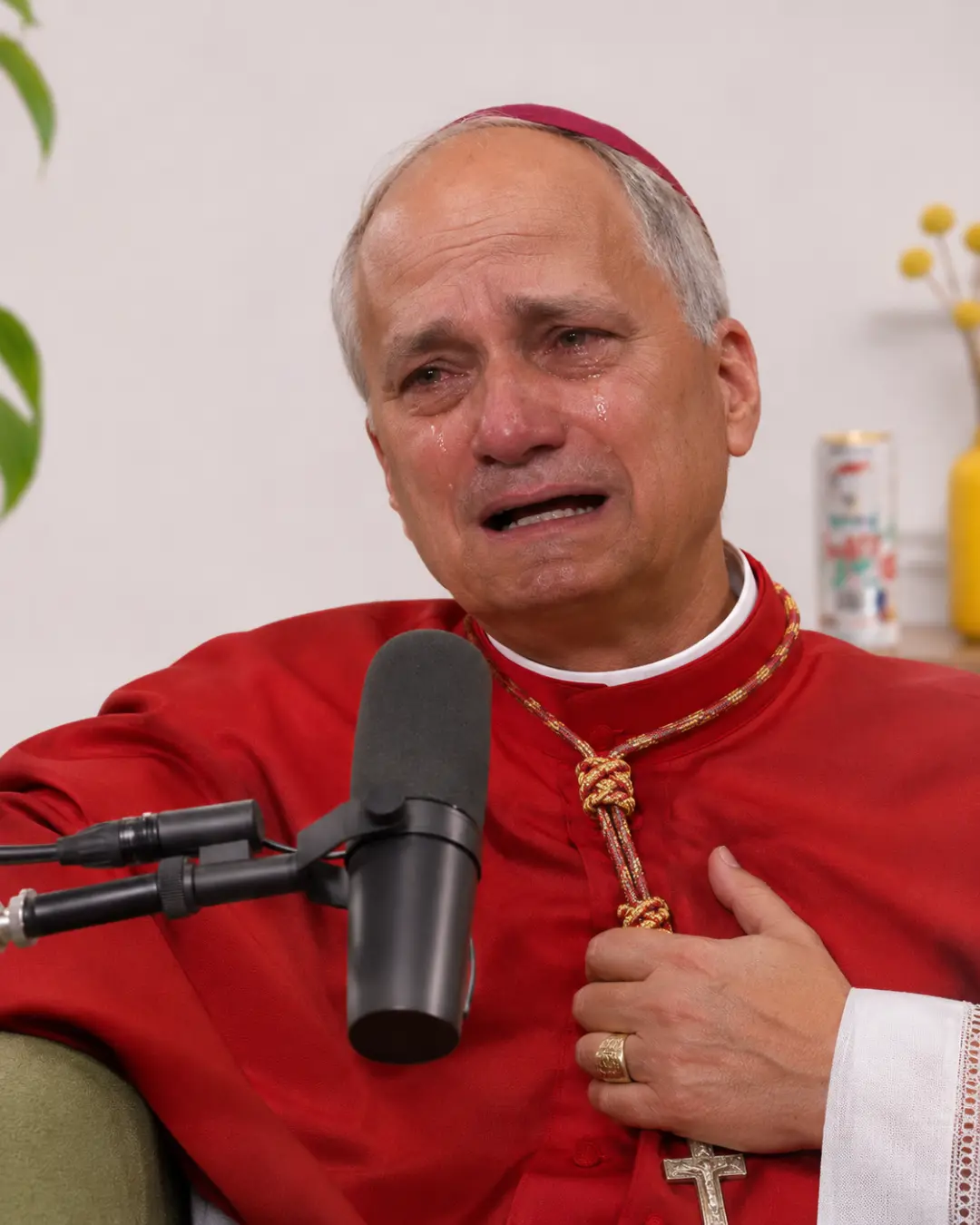
VATICAN CITY — Some moments in religious history are remembered for their magnificent ceremonies, while others endure because of a few words spoken with extraordinary sincerity. In this imagined Vatican celebration, Pope Leo XIV would experience a deeply moving tribute that began as a formal recognition of his spiritual leadership but gradually developed into something far more personal, revealing a message that would touch the hearts of believers across generations.
The title bestowed upon him, "The Heartbeat of a Generation," would immediately attract attention, suggesting an extraordinary recognition of a man whose journey from Chicago to the Vatican had already become a remarkable chapter in Catholic history. Yet the most unforgettable part of the evening would not be the honor itself, but the unexpected response Pope Leo XIV offered when invited to address the gathering.
What he revealed would transform a celebration of one individual into a reflection on millions of people whose quiet acts of compassion often pass unnoticed.
 An extraordinary gathering beneath Vatican lights
The fictional ceremony unfolded in a magnificent hall decorated with white flowers, softly glowing candles, and elegant arrangements inspired by the Vatican's artistic heritage. Religious representatives, charitable volunteers, educators, and invited families had gathered to recognize the importance of faith, service, and human solidarity.
At the center of the occasion stood Pope Leo XIV, whose election in May 2025 had marked a historic milestone as he became the first American-born pontiff. Born Robert Francis Prevost in Chicago, he had spent significant portions of his religious life serving communities in Peru before assuming leadership of the Catholic Church.
vatican.va
Those experiences provided a powerful foundation for the evening's imagined tribute, especially because the celebration emphasized the connections between religious leadership and everyday acts of kindness.
As the audience settled into silence, the ceremony's host approached the microphone and prepared to reveal the honorary title.
The announcement that captured everyone's attention
With the hall illuminated by warm golden light, the host described the importance of leadership that inspires people not merely through words, but through compassion and a willingness to listen.
Then came the announcement.
"Tonight, we recognize Pope Leo XIV as The Heartbeat of a Generation."
The audience rose in a prolonged standing ovation, while the pontiff remained seated for several moments, appearing surprised by the emotional response surrounding him.
In the imagined scene, a commemorative plaque was presented as a symbol of gratitude, but Pope Leo XIV did not immediately accept the attention directed toward him.
Instead, he looked across the gathering, where elderly volunteers sat beside young students, and families from different countries shared the same moment of celebration.
His expression suggested that he was thinking about something much larger than the honor being offered.

A speech that took an unexpected direction
When Pope Leo XIV finally approached the microphone, many expected a traditional message of gratitude, perhaps followed by reflections on the responsibilities of spiritual leadership.
Instead, his opening words redirected the evening's attention.
"If there is a heartbeat that gives life to a generation," he said in this imagined address, "it belongs to the people who continue loving when love becomes difficult, who continue helping when nobody is watching, and who refuse to abandon hope when the world seems overwhelmed by suffering."
The audience listened attentively as he continued describing the quiet sacrifices of parents, caregivers, teachers, missionaries, and volunteers.
He spoke about people who prepare meals for strangers, visit lonely neighbors, care for sick relatives, and offer encouragement to those who have lost confidence in the future.
The message was simple, yet it carried a powerful implication: an honor intended for one person could become a celebration of countless individuals whose contributions rarely receive public recognition.
The revelation that changed the atmosphere
Then came the emotional turning point.
In this dramatized scene, Pope Leo XIV explained that throughout his years of religious service, some of the most meaningful lessons had come not from grand ceremonies or important meetings, but from ordinary people facing extraordinary hardship.
He recalled the image of an elderly woman who continued preparing food for struggling neighbors despite having very little herself, and a young volunteer who spent evenings helping children learn because he believed education could change their futures.
These illustrative stories became the foundation of his message about the meaning of genuine spiritual leadership.
"People sometimes believe that hope must arrive through something spectacular," he reflected. "But very often, hope enters through an open door, a shared meal, a patient conversation, or a hand extended when someone believes they have been forgotten."
The hall fell silent as the audience absorbed the significance of those words.
A personal reminder of his journey
The imagined tribute also offered an opportunity to reflect on the extraordinary path that brought Robert Prevost to the papacy.
His journey from the United States to missionary service in Peru had exposed him to communities with different cultural traditions, economic circumstances, and spiritual needs. Those experiences helped shape a religious vocation that eventually led him to the highest office of the Catholic Church.
His real-life connection to Peru remained especially meaningful, with large crowds gathering during his November 2026 visit to the country where he had served for many years.
Reuters
Against that background, the fictional ceremony's central message carried additional emotional significance.
It suggested that the most enduring measure of leadership is not the size of the audience listening, but the lasting difference made in the lives of others.
An unexpected request from the pontiff
As the ceremony approached its conclusion, the host invited Pope Leo XIV to hold the commemorative plaque for an official photograph.
But in the imagined scene, the pontiff made a surprising request.
He asked that several charitable volunteers, including a young teacher and an elderly caregiver, join him at the front of the hall.
The audience watched as the honorees stepped forward, visibly moved by the unexpected invitation.
Rather than standing alone at the center of the photograph, Pope Leo XIV positioned himself among them and suggested that the recognition should represent everyone who serves others without expecting applause.
The gesture shifted the ceremony's focus from individual achievement toward collective responsibility.
And it was precisely this unexpected decision that gave the evening its deepest meaning.

The final message that no one expected
Before leaving the stage, Pope Leo XIV returned to the microphone one last time.
He explained that the world did not need people to wait for extraordinary opportunities before choosing kindness, because meaningful change often begins with ordinary decisions made in homes, schools, hospitals, and neighborhoods.
In this imagined closing message, he encouraged everyone present to remember someone who had helped them during a difficult period and to express gratitude while the opportunity remained.
The hall grew quiet as people considered the names and faces that immediately came to mind.
Some remembered parents who had sacrificed for their children, while others thought of friends, teachers, or strangers whose compassion had arrived at exactly the right moment.
The title "The Heartbeat of a Generation" suddenly seemed to carry a meaning far greater than anyone had anticipated when the evening began.
A legacy measured in compassion
As the fictional celebration ended, the plaque remained on display, but the words spoken during the ceremony became the true centerpiece of the evening.
The imagined tribute had begun by honoring a pope, yet it concluded by recognizing the humanity shared by people from every background and generation.
For those who witnessed the scene, the most powerful revelation was that spiritual influence does not depend solely on visibility, authority, or ceremonial recognition.
It can also be found in the countless small decisions through which people make life more bearable for one another.
And perhaps that was the deepest message of the entire evening: the heartbeat of a generation is not one extraordinary person standing above everyone else, but millions of ordinary hearts choosing compassion when the world needs it most.